

Did Miami reveal a simple new coating or a real influence on the game?
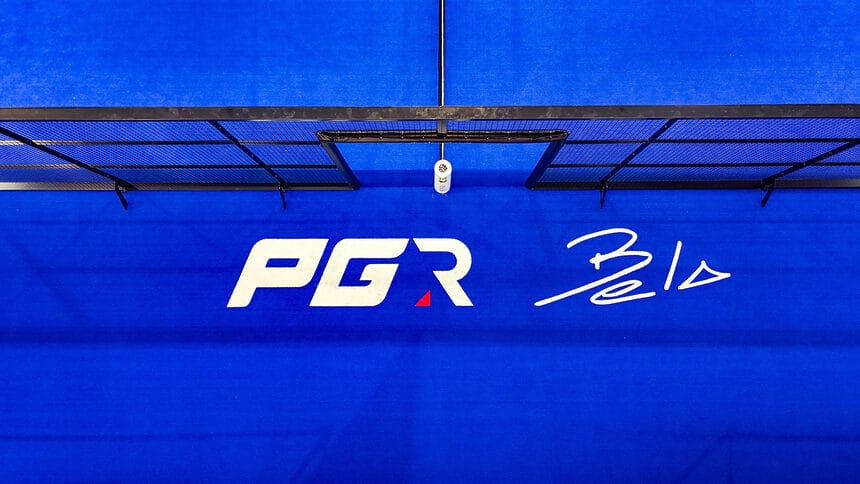
Miami P1 didn’t just relaunch the circuit’s American tour. It also served as the first full-scale breakthrough for the PGR by Bela surface, installed in a setting where every detail counts. On paper, it was just a new official carpet. On the track, the question was soon different: did this surface really influence the game, and did some pairs derive a clearer advantage from it than others?
- Did Miami reveal a simple new coating or a real influence on the game?
- Yes, the conditions have changed the way matches are played.
- In the men’s category, Galán and Chingotto were the big winners.
- For women, the surface has not designated a single beneficiary
- Which pairs seemed to benefit most from PGR by Bela?
- The real conclusion: PGR by Bela rewarded adaptation above all else
- Key takeaway
The most honest answer is twofold. Yes, something has clearly changed in the physiognomy of the matches in Miami, with padel more patient, more constructed and less immediately explosive. But no, it would be an exaggeration to make the carpet alone the total explanation for the week. A surface never plays a role on its own: the indoor environment, the tempo of the tournament, the feel of the moment and the players’ ability to adapt all count just as much. On the other hand, the PGR by Bela seems to have accentuated a trend: that of a tournament where continuity, reading the game and quality of movement have become even more important.
Yes, the conditions have changed the way matches are played.
What Miami has shown is not a spectacular revolution, but a very concrete modification of the margins. When exchanges become longer, when the ball circulates a little less quickly and the point requires more building, certain qualities become more visible: accuracy in replacement, patience on the diagonal, the ability to play one more ball without rushing. In this type of setting, the smash doesn’t disappear, but it’s no longer enough to tell the story of a match.
This is precisely why the surface counted. Not because it would have overturned the world hierarchy on its own, but because it helped to separate the pairs who were quickest to understand the conditions. In Miami, the real advantage was not necessarily for the most powerful, but for those who were quickest to find the right speed for their game.
In the men’s category, Galán and Chingotto were the big winners.
If it comes to identifying the pair who seem to have benefited most from this week, the Galán / Chingotto duo is the most obvious candidate. Their track record speaks for itself: a clean build momentum, little wasted time, a clear game, then a victory in the final over Coello / Tapia. In a tournament where precision, organization and continuity were rewarded more than anything else, their profile fit the bill perfectly.
The case of Chingotto sums it up nicely. When conditions slow the game down slightly, his volume, his coverage of the court and his ability to hold the structure of the point take on even more weight. Galán, for his part, can then choose his accelerations more lucidly, without having to constantly overplay his power. Coello and Tapia remained dangerous, of course, but Miami reduced the immediate impact of their first shots. The result didn’t invent a new balance of power; it simply highlighted the more stable pair in this particular context.
For women, the surface has not designated a single beneficiary
The women’s table tells a finer story. For much of the week, Triay / Brea gave the impression of being the most at ease in this slower Miami. Their structured padel, managing hot streaks and solidity in rallies seemed perfectly compatible with the proposed frame. At this stage, you might even have thought that the conditions would validate their current momentum even further.
And yet, the final shifted the reading. Josemaría / González finally found the right formula to win in the money time. This meant that the surface didn’t “offer” a title to one pair in particular; above all, it amplified the importance of adjustments. Triay and Brea seemed to absorb the conditions very well throughout the week, but Josemaría and González were the most accurate when it came to better managing key zones, better choosing acceleration sequences and better holding the pressure.
Which pairs seemed to benefit most from PGR by Bela?
| Pair | Reading the tournament | Probable profit |
|---|---|---|
| Galán / Chingotto | The masculine pair that best seemed to marry the slow conditions, thanks to its structure, consistency and intelligent construction. | Yes, clearly |
| Coello / Tapia | Still capable of making the difference, but with a slightly less immediate offensive advantage than in faster conditions. | Rather no |
| Triay / Brea | Very solid all week, with a game of patience and control perfectly compatible with the Miami context. | Yes, overall |
| Josemaría / González | Not necessarily the most advantageous over the week as a whole, but the ones who best resolved the final at key moments. | Yes, at the end of the tournament |
The real conclusion: PGR by Bela rewarded adaptation above all else
So it’s probably not the right angle to say that PGR by Bela has changed everything. That would be too strong, and probably untrue. On the other hand, to say that it has shifted the balance of the game seems much more accurate. In Miami, it helped to make the tournament more favorable to pairs capable of holding the ball, building more and finding the right reading of the court more quickly.
And that’s what makes this week so interesting to tell. The surface didn’t steal the show from the players; it highlighted their ability to make adjustments. On the men’s side, it clearly served Galán and Chingotto well. On the women’s side, it initially seemed to strengthen Triay and Brea, before Josemaría and González finally got the upper hand at the perfect moment. In other words, PGR by Bela didn’t create the Miami winners, but it probably helped to better reveal those who adapted the fastest.
Key takeaway
- The PGR by Bela surface seems to have had an impact on the tournament, with a more structured and patient game.
- In the men’s category, Galán / Chingotto are the most obvious beneficiaries of this context.
- On the women’s side, the spin was more nuanced: Triay / Brea absorbed the week very well, but Josemaría / González handled the final better.
- Miami’s real keyword is not “revolution”, but adaptation.